


Upcoming Tech Trends in 2019
- Posted by: Adriene Hall

- Jan 8, 2019
- 3 min read
Updated: Jan 14, 2019
What can we expect to see in technology this year? Although we're all bitterly disappointed that it's 2019 and we're STILL not driving our flying cars, we still have plenty of amazing advances to look forward to.

For 2019, governments and tech companies are set to work on further developing and establishing 21st century tech innovations that will transform aspects of everyday life.
Automation and Artificial intelligence Everywhere
Everyone is talking about AI. We’re interacting with technology in new ways, from giving voice commands to washer-dryers to playing advanced gesture-controlled video games. Governments are competing to establish superior AI research, seeing AI as a lever for greater economic influence and power. We’re also in the early stages of drastic shifts in the labor market.
“The system will make one T-shirt every 22 seconds. We will produce 800,000 T-shirts a day for Adidas… even the cheapest labor market can’t compete with us.” -Tang Xinhong, chairman of Tianyuan Garments, speaking to ChinaDaily
“Most of (the) software we write today at Google, everything, these are hand-coded systems... Over time, these could be lone systems, which automatically writes itself.” -Sundar Pichai, Google CEO
Self-driving Cars
Intel predicts that the advent of autonomous driving will liberate commuters, resulting in more than 250 million hours of commuting time per year in the world’s most congested cities. That could represent a $200 billion market for in-vehicle applications and content.

Google subsidiary Waymo is the first firm to offer a self-driving taxi service, although it is initially only on offer in a suburb of Phoenix, Arizona, in the United States.
Other firms are ready to jump in – carmakers, components suppliers, ride-sharing outfits like Uber and other less well-known startups. 2019 may well be the year in which the efficacy of their technology and solutions are put to the test in real terms.
Personally, I'm not sure which is creepier; trusting a self-driving car or stranger-danger Uber drivers.
Mobile/Cashless payment
Technically speaking, many people can already use their mobile phone instead of a bank card for transactions. Apple Pay, AliPay and Venmo are just a few names with stake in the projected $1 trillion valuation of mobile payment transaction value for 2019.

The Pros
Certain types of crime reduced: Anyone running round with a purse full of cash runs the risk of the money being stolen. Once that money is gone, it’s gone so a cashless society would eliminate that. Furthermore, illegal transactions such as drug trade will decrease as it typically takes place with cash so that there’s no record of the transaction.
No cash management: Printing bills and coins is extremely expensive. Digital payments cut operating costs for businesses and banks. In a cashless society they wouldn’t have to invest in secure storage facilities.
International payments: International payments would become far less frictionless in a cashless society. Instead of having to buy local currency when visiting a foreign country, travelers could pay with a debit or credit card or a mobile device.
The Cons
Some will get left behind: Certain groups of people in society risk getting left behind. The older generation may be uncomfortable using only digital technology to pay. Equally the homeless and unbanked would be left out with absolutely no way to complete any sort of transactions.
Digital hacking: Although cash can lead to crimes such as theft and mugging, a cashless society would open the door to far more online hacking.
Technology issues: A cashless society would be vulnerable to technical problems within the systems. If a technical fault happened within the global payment system trade could be halted and affect businesses and consumers worldwide.
Digital Assistants
Chatbots have been improving customer service for businesses of all types in recent years; you can even order a pizza through a Facebook chat bot now. In 2019, expect chat-bots to become even more advanced and human than before. With natural language programming, you no longer have to have a robotic conversation: Consumers can speak to chat-bots just as they would a live chat agent. Beyond simple chat-bots, more companies will also be implementing life-like animated virtual agents, too.
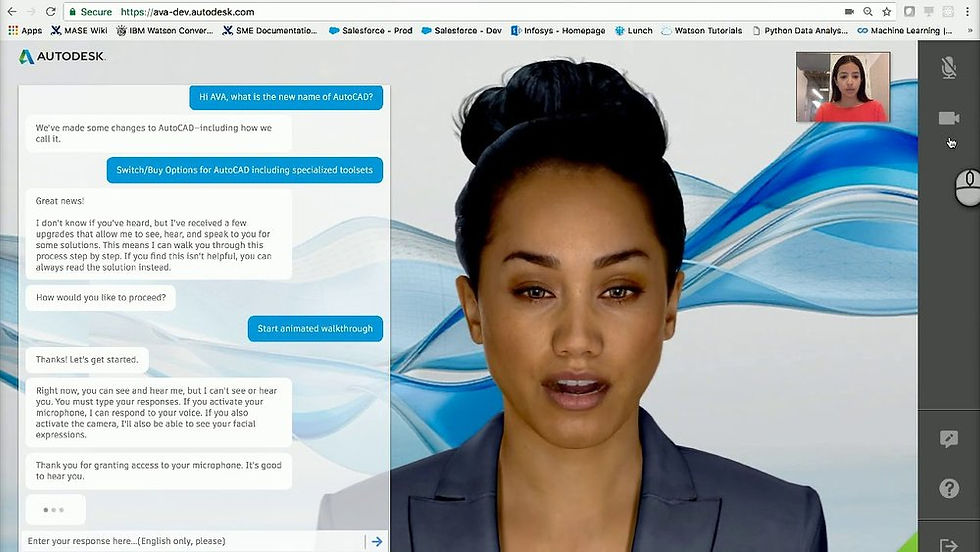
Autodesk recently unveiled its virtual agent, Ava. Ava is a “digital human” who can answer customers' questions, direct them to content and help them check out, as well as respond interactively to emotional signals from those users.
More and more retailers and businesses will be using conversational chat-bots and virtual agents to solve customer service issues without having to pass users off to a real-life staffer.


Comments